
Growth that hides leakage
High-volume businesses can grow while quietly losing money. The antidote is not slower growth — it is better visibility into the quality of growth.
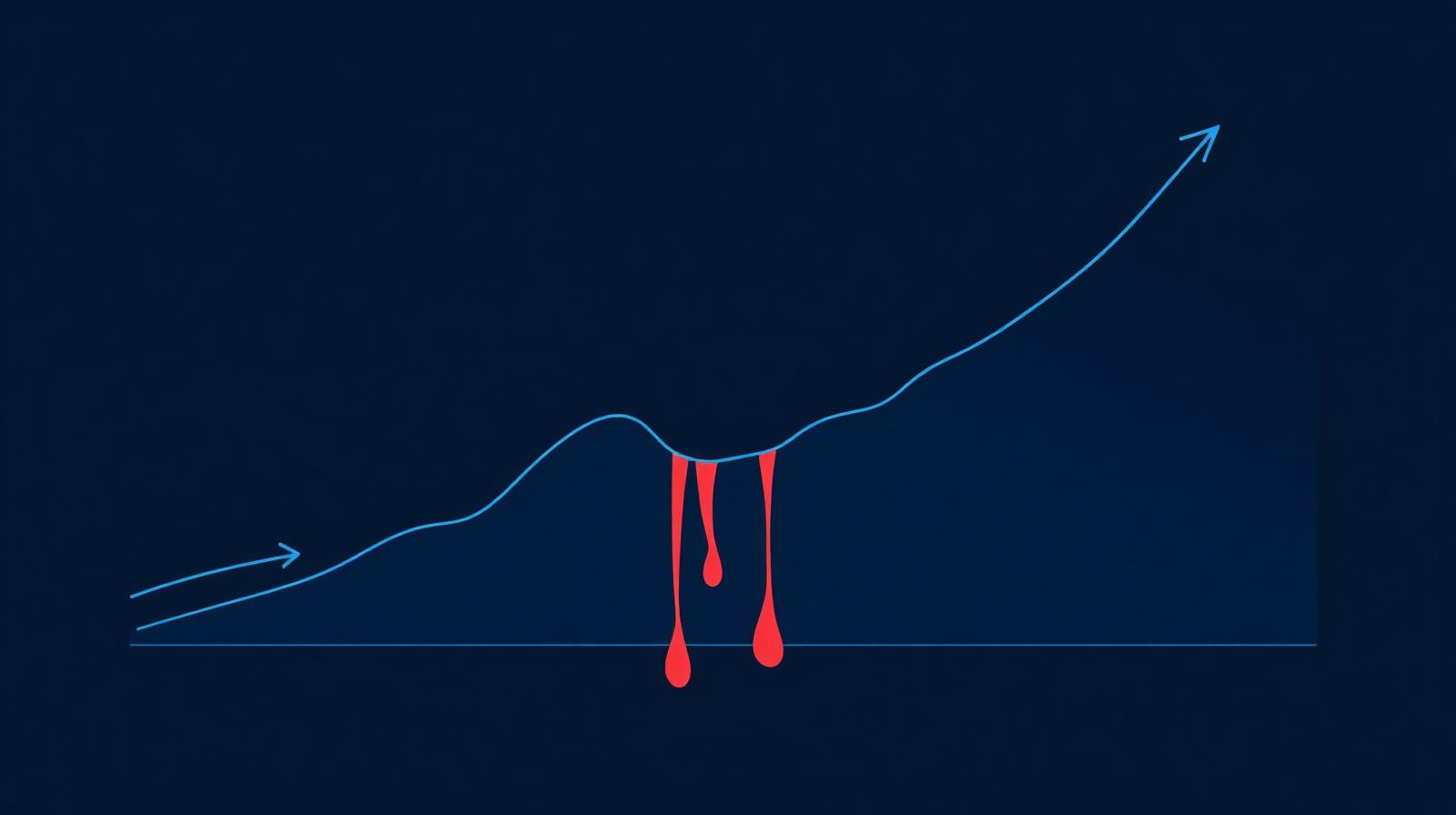
Growth can make a business look stronger than it is.
Revenue rises. Customer numbers increase. Volumes improve. The sales story looks healthy. The board pack shows momentum.
But underneath the growth, margin may be leaking.
High-volume businesses are particularly exposed to this. More customers, more transactions, more orders, more projects or more service lines can create the appearance of progress while quietly increasing complexity, cost and operational drag.
The business is growing.
But not all growth is profitable.
The danger of blended performance
Margin erosion often hides inside averages.
- Overall revenue is up, but certain customers are unprofitable.
- Gross margin looks stable, but cost-to-serve is rising.
- A product line appears healthy, but delivery effort is increasing.
- A region is growing, but discounting is doing the work.
- A client is strategically important, but consumes disproportionate operational capacity.
Blended reporting can hide these issues for too long.
The company sees the average. It misses the leakage.
By the time the problem is visible at board level, the business may already have spent months scaling the wrong activity.
Revenue is not the same as value
High-volume businesses often measure what is easiest to see.
- Revenue.
- Orders.
- Users.
- Transactions.
- Bookings.
- Utilisation.
- Pipeline.
These metrics matter. But they do not always show whether the business is creating value.
- A customer that buys often may still be low margin.
- A contract that looks large may be expensive to service.
- A fast-growing channel may carry hidden operational cost.
- A new product may increase revenue while creating support, delivery or fulfilment pressure elsewhere.
Growth is only valuable if the business understands what it costs to deliver.
That is why cost-to-serve clarity matters.
The cost-to-serve problem
Cost-to-serve is the full cost of delivering value to a customer, product, channel or segment.
It includes the obvious costs, but also the less visible ones: service effort, support time, delivery complexity, rework, exceptions, onboarding, implementation, account management, operational escalation, credit risk, discounting and management attention.
Many companies do not see this clearly.
- They know revenue by customer.
- They may know gross margin by product.
- But they often cannot see true profitability by segment, customer type, channel or delivery model.
That creates weak decisions.
- The business keeps winning work it should reprice.
- It keeps serving customers it should reshape.
- It keeps scaling products that require too much manual effort.
- It keeps rewarding growth that dilutes margin.
Where margin leakage hides
Margin leakage usually sits in the places where reporting is least precise.
- Discounting that is treated as a sales issue, not a value issue.
- Service exceptions that are absorbed by operations.
- Manual workarounds that never reach the P&L as a separate cost.
- Customer support that rises faster than revenue.
- Implementation effort that is underestimated.
- Delivery complexity that grows with each new customer type.
- Poor handovers between sales and operations.
- Custom promises made to win deals.
- Small errors repeated at high volume.
None of these may look material alone.
Together, they can change the economics of the business.
The board-level risk
The risk is not simply lower margin.
The risk is that leadership makes the wrong decisions because the economics are unclear.
- A board may approve expansion into a segment that looks attractive but is structurally expensive to serve.
- A CEO may push for more volume when the business should be improving mix.
- A CFO may see margin erosion but not know where it is coming from.
- A sales team may be rewarded for revenue that weakens profit.
- An operations team may absorb complexity that should have changed pricing.
This is how growth hides leakage.
The business is busy. The top line is moving. The commercial story looks positive.
But the operating truth is weaker.
Cost-to-serve clarity changes the conversation
When a company understands cost-to-serve, the management conversation changes.
The question is no longer only: "Where are we growing?"
It becomes:
- Where are we creating profitable growth?
- Which customers are worth more than they appear?
- Which customers are worth less?
- Which products carry hidden delivery cost?
- Which segments require too much exception handling?
- Which channels scale cleanly?
- Where should we reprice, redesign, automate or exit?
This is not about cutting for the sake of cutting.
It is about making growth more intelligent.
Why dashboards are not enough
Most companies already have some view of margin.
The problem is that the view is often too high-level, too late or too disconnected from operating reality.
A dashboard may show that margin has fallen.
It may not show why.
It may not connect the movement to customer type, order behaviour, support burden, fulfilment complexity, sales discounting or delivery effort.
It may not show who owns the response.
It may not trigger a pricing decision, service redesign or operational intervention.
Visibility is useful. But margin improvement requires decision confidence.
The business needs to move from seeing margin erosion to understanding and acting on it.
The decision layer for margin
A decision layer connects financial performance to operational reality.
It links revenue, cost, customer behaviour, delivery effort, service intensity, pricing, ownership and action.
It allows leadership to see not just whether margin is moving, but where, why and what decision is required.
For margin erosion, the decision layer should answer practical questions.
- Which customers are genuinely profitable?
- Which segments are growing but diluting value?
- Where is cost-to-serve rising?
- Which activities should be automated?
- Which services should be repriced?
- Which promises should sales stop making?
- Which operating issues are creating avoidable leakage?
Without that layer, margin erosion becomes a reporting issue.
With it, margin becomes a management lever.
Growth needs a quality test
Not all revenue deserves the same treatment.
- Some growth is strategic.
- Some growth is profitable.
- Some growth is distracting.
- Some growth is actively destructive.
The role of leadership is to know the difference early enough to act.
That requires more than volume metrics. It requires cost-to-serve clarity, trusted data and a clear route from insight to decision.
High-volume businesses can grow while quietly losing money.
The antidote is not slower growth.
It is better visibility into the quality of growth.
Growth that hides leakage weakens the business.
Growth that is understood, priced and managed properly compounds value.