
Closing the latency gap at the senior table
The senior table should not be the first place where the organisation discovers what is happening. It should be where trusted signals become decisions.
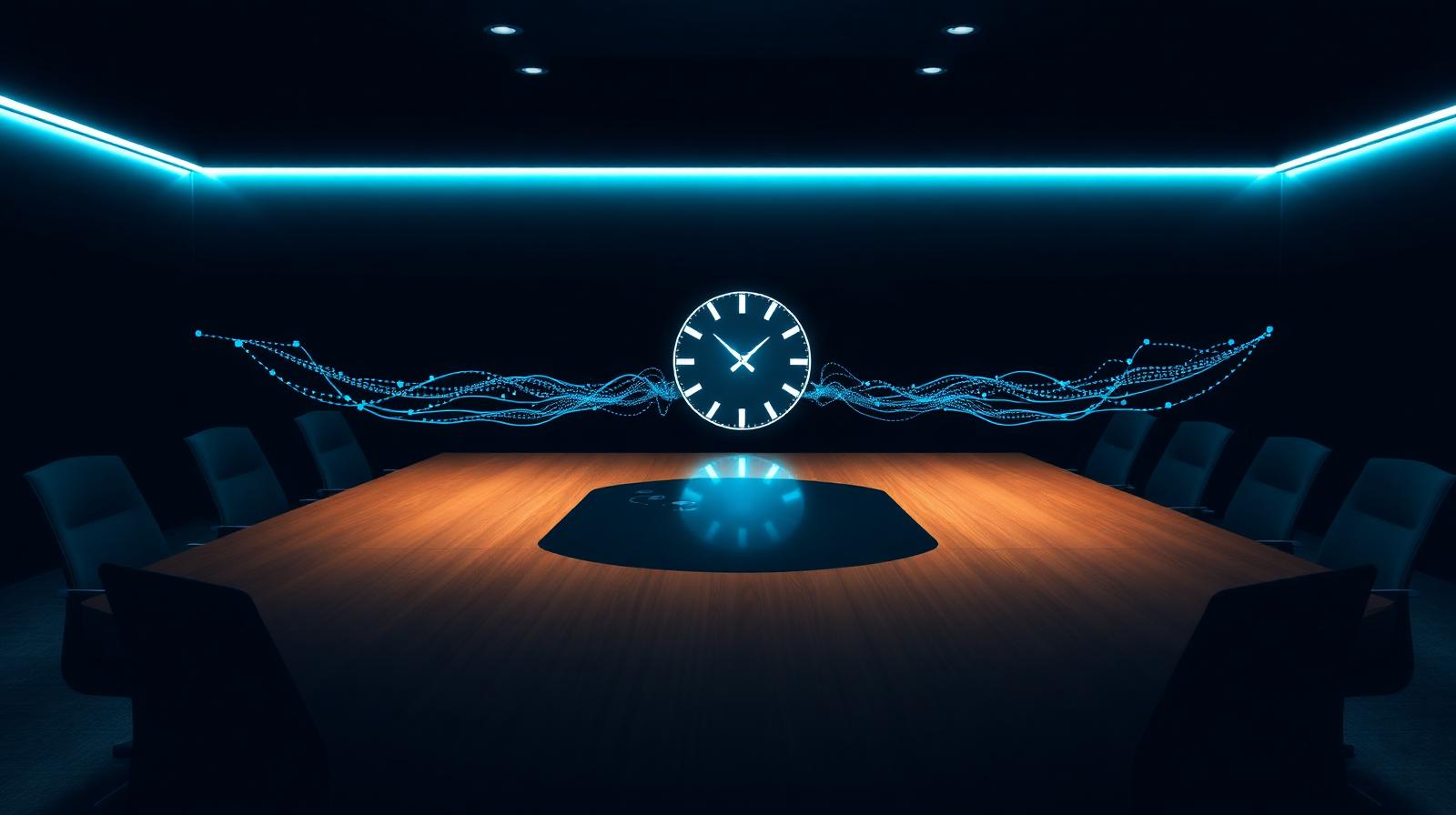
Most leadership teams are not making decisions in real time.
They are making decisions after the organisation has finished explaining itself.
The sales team updates the forecast. Finance reconciles the numbers. Operations explains the variance. Customer data is cleaned. Margin movement is investigated. Risks are summarised. Commentary is drafted. Slides are prepared. The board pack is circulated.
By the time the information reaches the senior table, the business has already moved on.
That delay is information lag.
It is the gap between what is happening in the organisation and what leadership can confidently see.
The problem is not reporting speed alone
Information lag is often mistaken for a reporting problem.
The pack needs to go out faster. The dashboard needs to refresh sooner. The commentary needs to be shorter. The reporting calendar needs more discipline.
Those things may help.
But the real issue is deeper.
Leadership does not just need information earlier. It needs operating truth earlier.
That means the information must be current, trusted, contextual and connected to action.
- A faster report that still requires debate is not real progress.
- A live dashboard that no one trusts does not improve decision speed.
- A KPI that moves without ownership simply creates another conversation.
The latency gap closes only when senior teams can move from signal to decision with confidence.
Why senior conversations lag
Leadership conversations often lag because the organisation has to manually assemble its own reality.
- Data sits in different systems.
- Metrics are defined differently across teams.
- Important context lives in people's heads.
- Exceptions are known locally but not visible centrally.
- Reports depend on spreadsheets and manual reconciliation.
- Ownership is unclear until the meeting exposes the issue.
The result is a senior conversation that starts too far back.
Instead of asking, "What should we do?"
The team asks:
- "Is this number right?"
- "Why does Finance show something different?"
- "Who owns this?"
- "What is driving it?"
- "Can we get more detail for next week?"
That is not decision-making. It is delayed sense-making.
The cost of information lag
Information lag creates real commercial cost.
- Margin erosion is spotted after the leakage has already compounded.
- Customer issues surface after retention risk has increased.
- M&A integration drifts before value leakage is visible.
- Sales underperformance becomes clear after the quarter is already difficult to recover.
- AI projects stall because the underlying data cannot be defended.
- Board meetings become retrospective reviews rather than forward decision forums.
The organisation may still be well-managed. But it is managing from a delayed picture.
In stable conditions, that delay may be tolerable.
In faster markets, acquisitive businesses or margin-sensitive environments, it becomes a performance constraint.
Live operating truth
Closing the latency gap does not mean flooding executives with real-time data.
That often creates noise rather than clarity.
Live operating truth means leadership can see the few things that matter early enough to act.
It means the organisation has agreed definitions, trusted sources, clear owners and practical triggers.
It means performance signals are connected to context.
It means the senior team can distinguish movement from noise.
It means the question is not simply, "What happened?"
It is:
- "What does this mean?"
- "Who owns it?"
- "What decision is required?"
- "What happens if we do nothing?"
That is the shift from reporting to operating intelligence.
Practical patterns that reduce lag
The first pattern is metric discipline. Leadership teams need fewer, clearer measures. Each important metric should have a definition, owner, source and decision purpose. If no decision changes when the metric moves, it may not belong at the senior table.
The second pattern is source confidence. The organisation needs to know where the number comes from, how current it is and how much confidence should be attached to it. A live number is not useful if it is not trusted.
The third pattern is ownership. Signals need named owners before they reach the meeting. Otherwise, the meeting becomes the place where accountability is negotiated.
The fourth pattern is trigger logic. Not every movement matters. Leadership needs agreed thresholds for when something requires attention, escalation or action.
The fifth pattern is context capture. The explanation should travel with the signal. If margin falls, the senior team should see whether the cause is pricing, mix, cost-to-serve, delivery complexity or data quality.
The sixth pattern is decision workflow. A signal should not end as a discussion point. It should lead to a decision, action, owner, deadline or explicit choice to do nothing.
The role of the decision layer
The decision layer is what closes information lag.
It sits between source systems and senior judgement. It connects data, definitions, workflows, ownership, evidence and escalation.
Its purpose is not to create more reporting.
Its purpose is to create decision-ready operating intelligence.
With a decision layer, leadership conversations move from retrospective explanation to timely action.
- The board does not wait 30 days to understand margin leakage.
- The CEO does not wait for a monthly review to see that a segment is drifting.
- The CFO does not need three teams to reconcile profitability.
- The integration lead does not need a steering committee to discover that value capture is slipping.
The business can see earlier, understand faster and act with more confidence.
What leaders should look for
Information lag is usually present when:
- Leadership meetings begin with number reconciliation.
- Board packs are polished but retrospective.
- Dashboards exist, but decisions still require manual follow-up.
- Issues are known by operators before they are visible to executives.
- The same questions recur across meetings.
- Management asks for more analysis before most decisions.
- Margin, customer or integration issues become clear too late.
- AI outputs cannot be defended because the underlying data is unclear.
These are signs that the organisation is not short of information.
It is short of timely operating truth.
Closing the latency gap
The senior table should not be the first place where the organisation discovers what is happening.
It should be where trusted signals become decisions.
That requires more than faster reporting. It requires a working decision layer: clear data, clear ownership, clear context and clear routes to action.
Information lag is not just an inconvenience.
It is the delay between knowing and moving.
The organisations that close that gap will not simply report faster.
They will act faster.
And in most markets, that is the advantage that matters.